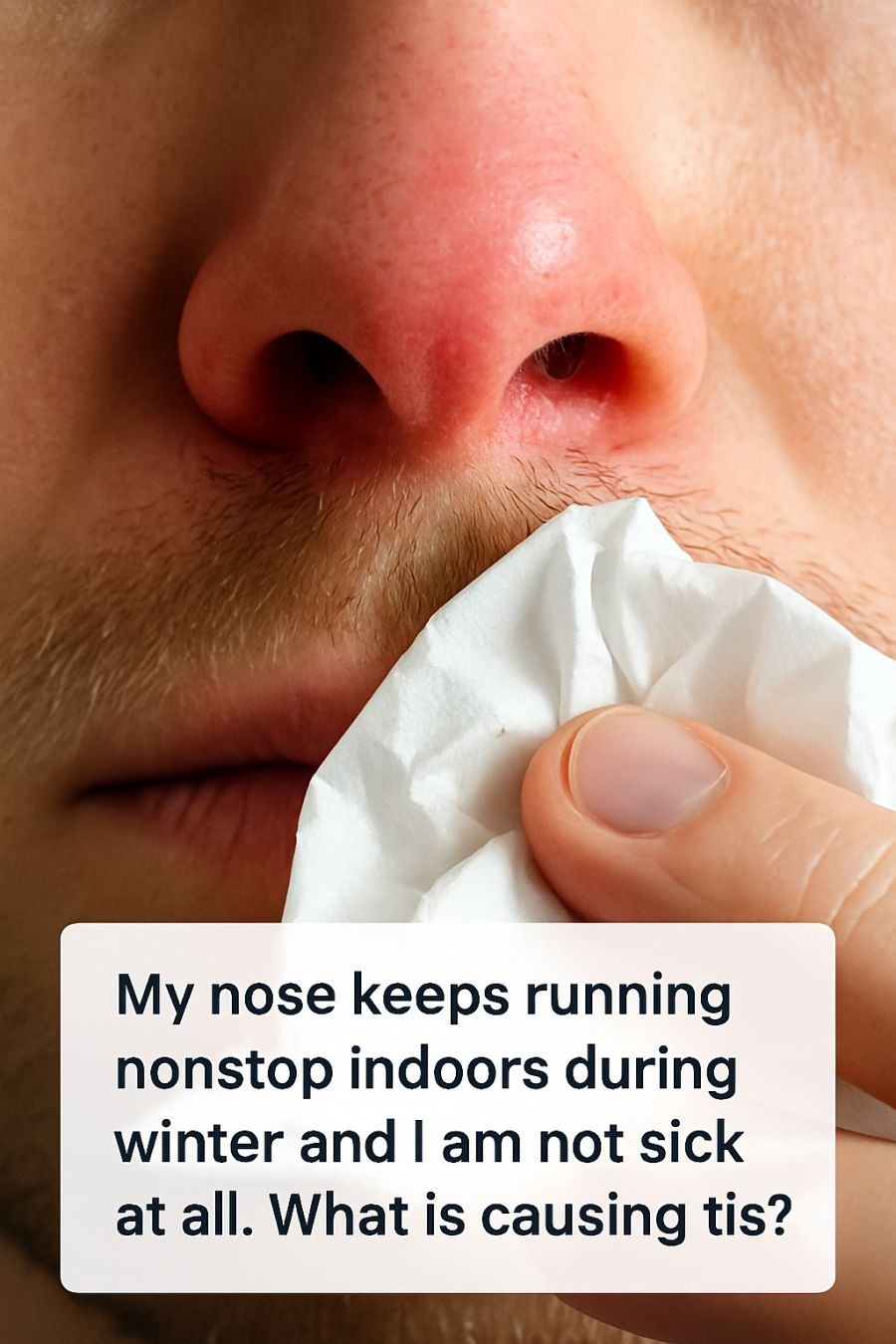
As the temperature drops and winter settles in, many people find themselves battling a nuisance that seems to defy the season’s charm: a persistently runny nose. It’s an inconvenience that strikes indoors, turning cozy nights by the fire into a constant search for tissues. For those who are otherwise healthy and free from colds or flu, this phenomenon can be both perplexing and frustrating.
Understanding why your nose runs non-stop indoors during winter, despite not being sick, involves delving into a range of environmental and physiological factors. From the effects of dry indoor air to the body’s reactions to temperature changes and potential irritants, multiple elements come into play. This article explores the common causes and offers practical solutions to help manage this winter annoyance.1. Why Your Nose Runs Indoors Only In Winter
The phenomenon of experiencing a runny nose primarily indoors during winter can be attributed to a combination of environmental factors and the body’s physiological responses. In cold weather, the body works to warm and humidify the air before it reaches the lungs, which can cause the nasal passages to produce more mucus. This is an automatic response to prevent the cold air from irritating the sensitive tissues of the respiratory tract.
Additionally, indoor environments in winter are often sealed off to conserve heat, which can lead to the accumulation of irritants and allergens that might not be as concentrated in the warmer months when ventilation is more frequent.
2. The Role Of Dry, Heated Indoor Air In Triggering A Runny Nose
When the heating systems kick in during winter, they often dry out the air within the home. Relative humidity levels can drop significantly, sometimes to as low as 10-20%, whereas comfortable levels are typically between 30-50%. This dry air can irritate the mucous membranes inside the nose, leading to increased mucus production as the body attempts to maintain moisture in the nasal passages.
Using humidifiers to add moisture back into the air can help alleviate this issue, keeping nasal passages from drying out and reducing the need for the body to produce excess mucus.
3. Vasomotor Rhinitis: When Your Nose Overreacts But You Are Not Sick
Vasomotor rhinitis is a condition characterized by a runny nose that is not caused by allergies or infections. Instead, it results from the overactivity of the nasal nerves, which can be triggered by environmental factors like changes in temperature or humidity. During winter, moving from the cold outdoors to warm indoors can stimulate these nerves, leading to increased mucus production.
Symptoms of vasomotor rhinitis include a runny nose, nasal congestion, and sometimes sneezing, but without the itchy eyes or throat that are typical of allergic reactions.
4. Temperature Swings From Outdoors To Indoors And Their Effect On Nasal Nerves
Frequent and abrupt temperature changes, such as moving from the cold outdoor air to the warmth of a heated indoor environment, can cause the blood vessels in the nose to dilate. This dilation triggers the nasal glands to produce more mucus as a protective mechanism against the irritation caused by such shifts.
This response is part of the body’s natural mechanism to ensure the air is warmed and humidified before reaching the lungs, but it can be particularly noticeable in winter when such temperature swings are more pronounced.
5. Irritants Hiding In Your Home: Dust, Fragrances, And Cleaning Products
Indoor air quality can deteriorate during winter due to reduced ventilation, leading to the accumulation of dust, pet dander, and chemical irritants from cleaning products or fragrances. These particles can irritate the nasal passages, causing them to secrete more mucus as a defensive response.
Regular cleaning, using air purifiers, and choosing fragrance-free products can help minimize these irritants, providing relief from a runny nose.
6. Humidity Levels, Dehydrated Mucosa, And Overcompensation Drip
Low humidity levels in winter can lead to dehydration of the mucous membranes in the nose. When these tissues become dry, they can overcompensate by producing more mucus, resulting in a runny nose. This is often exacerbated by prolonged exposure to heated indoor environments where humidity is not adequately controlled.
Maintaining optimal humidity levels with the help of a humidifier can prevent the nasal passages from becoming overly dry, thus reducing the amount of mucus produced.
7. Hidden Allergies: Mold, Pet Dander, And Dust Mites That Flare Up In Winter
Allergens such as mold spores, pet dander, and dust mites can become more concentrated indoors during winter. With windows and doors closed to keep out the cold, these allergens can accumulate, triggering allergic reactions in sensitive individuals. Unlike seasonal allergies caused by pollen, these indoor allergens can lead to symptoms like a runny nose throughout the winter months.
Regular cleaning, using HEPA filters, and maintaining good ventilation can help manage these allergens and reduce their impact on your nasal health.
The phenomenon of experiencing a runny nose primarily indoors during winter can be attributed to a combination of environmental factors and the body’s physiological responses. In cold weather, the body works to warm and humidify the air before it reaches the lungs, which can cause the nasal passages to produce more mucus. This is an automatic response to prevent the cold air from irritating the sensitive tissues of the respiratory tract.
Additionally, indoor environments in winter are often sealed off to conserve heat, which can lead to the accumulation of irritants and allergens that might not be as concentrated in the warmer months when ventilation is more frequent.
2. The Role Of Dry, Heated Indoor Air In Triggering A Runny Nose
When the heating systems kick in during winter, they often dry out the air within the home. Relative humidity levels can drop significantly, sometimes to as low as 10-20%, whereas comfortable levels are typically between 30-50%. This dry air can irritate the mucous membranes inside the nose, leading to increased mucus production as the body attempts to maintain moisture in the nasal passages.
Using humidifiers to add moisture back into the air can help alleviate this issue, keeping nasal passages from drying out and reducing the need for the body to produce excess mucus.
3. Vasomotor Rhinitis: When Your Nose Overreacts But You Are Not Sick
Vasomotor rhinitis is a condition characterized by a runny nose that is not caused by allergies or infections. Instead, it results from the overactivity of the nasal nerves, which can be triggered by environmental factors like changes in temperature or humidity. During winter, moving from the cold outdoors to warm indoors can stimulate these nerves, leading to increased mucus production.
Symptoms of vasomotor rhinitis include a runny nose, nasal congestion, and sometimes sneezing, but without the itchy eyes or throat that are typical of allergic reactions.
4. Temperature Swings From Outdoors To Indoors And Their Effect On Nasal Nerves
Frequent and abrupt temperature changes, such as moving from the cold outdoor air to the warmth of a heated indoor environment, can cause the blood vessels in the nose to dilate. This dilation triggers the nasal glands to produce more mucus as a protective mechanism against the irritation caused by such shifts.
This response is part of the body’s natural mechanism to ensure the air is warmed and humidified before reaching the lungs, but it can be particularly noticeable in winter when such temperature swings are more pronounced.
5. Irritants Hiding In Your Home: Dust, Fragrances, And Cleaning Products
Indoor air quality can deteriorate during winter due to reduced ventilation, leading to the accumulation of dust, pet dander, and chemical irritants from cleaning products or fragrances. These particles can irritate the nasal passages, causing them to secrete more mucus as a defensive response.
Regular cleaning, using air purifiers, and choosing fragrance-free products can help minimize these irritants, providing relief from a runny nose.
6. Humidity Levels, Dehydrated Mucosa, And Overcompensation Drip
Low humidity levels in winter can lead to dehydration of the mucous membranes in the nose. When these tissues become dry, they can overcompensate by producing more mucus, resulting in a runny nose. This is often exacerbated by prolonged exposure to heated indoor environments where humidity is not adequately controlled.
Maintaining optimal humidity levels with the help of a humidifier can prevent the nasal passages from becoming overly dry, thus reducing the amount of mucus produced.
7. Hidden Allergies: Mold, Pet Dander, And Dust Mites That Flare Up In Winter
Allergens such as mold spores, pet dander, and dust mites can become more concentrated indoors during winter. With windows and doors closed to keep out the cold, these allergens can accumulate, triggering allergic reactions in sensitive individuals. Unlike seasonal allergies caused by pollen, these indoor allergens can lead to symptoms like a runny nose throughout the winter months.
Regular cleaning, using HEPA filters, and maintaining good ventilation can help manage these allergens and reduce their impact on your nasal health.
Continued on next page: